Single API for Transactional and Marketing Email in Agentic Apps
Unified email APIs prevent agents from duplicating sends and breaking compliance.
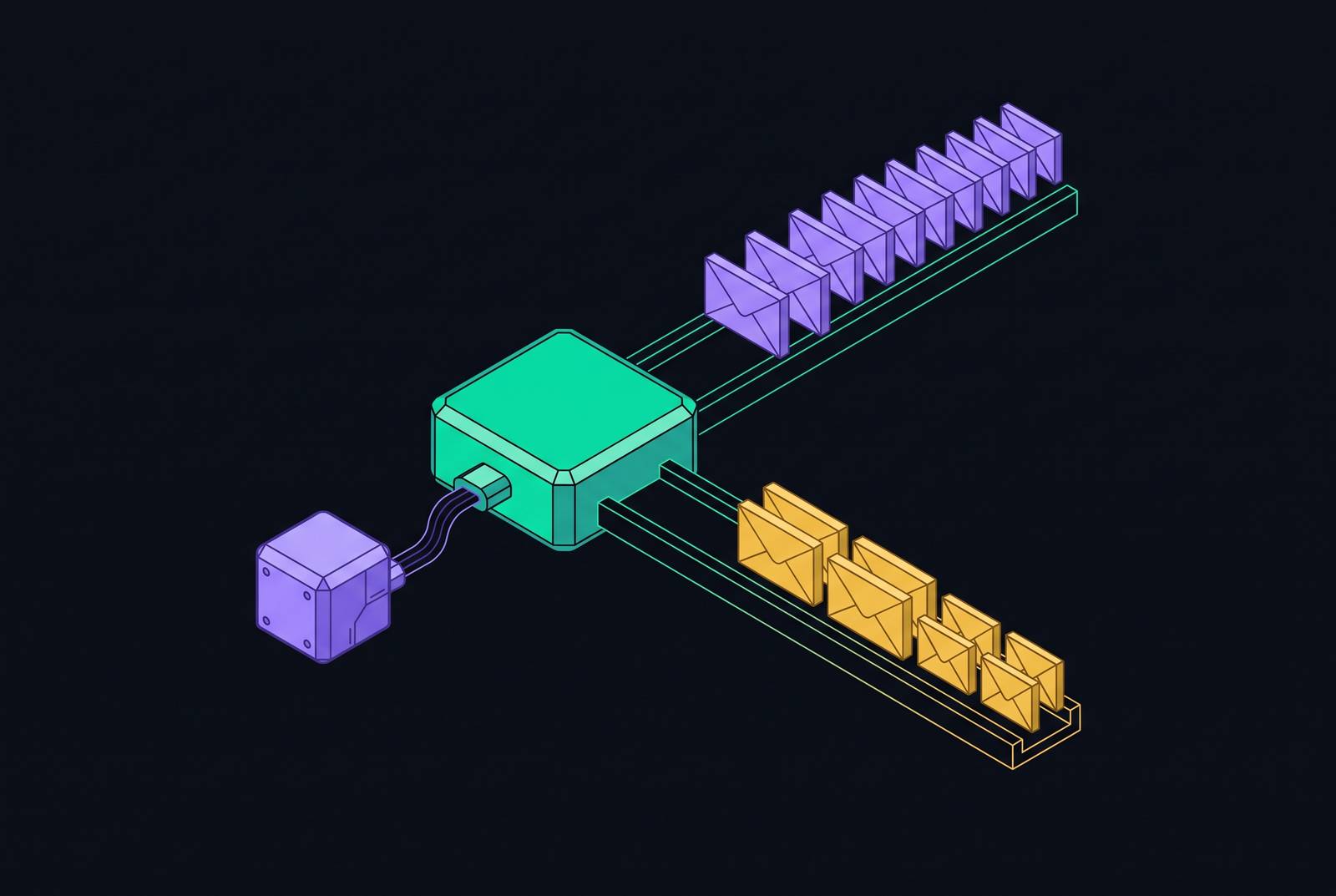
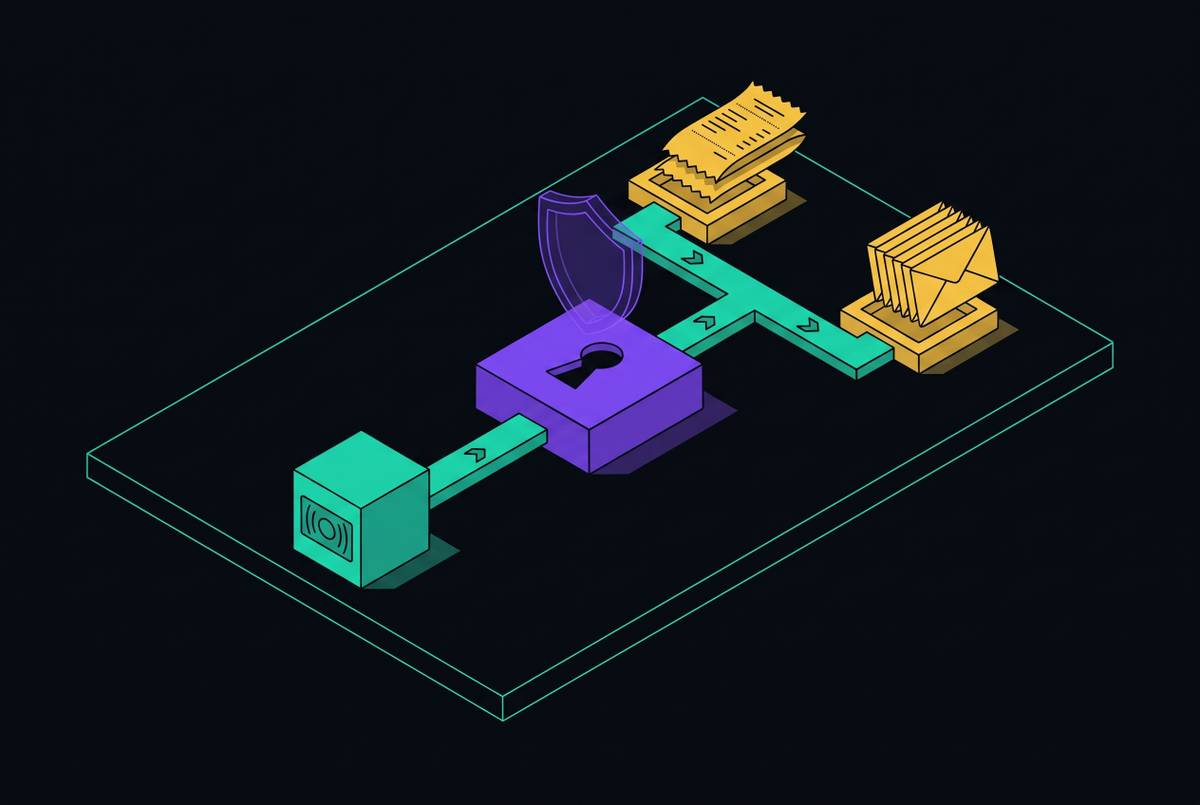
If an email API handles transactional sends and marketing campaigns through the same surface, that is a structural requirement for agents, not a convenience feature. The two-vendor pattern that dominates email infrastructure today, one API for receipts and password resets, another for newsletters and campaigns, was built around a human operator who could check both dashboards, notice when the two systems disagreed, and fix the mismatch by hand. Agents don't have that layer of oversight. When an agent owns a workflow end to end, it has to reason across a boundary that two separate APIs create: subscriber state lives in one system, delivery status for transactional mail lives in another, and suppression lists get duplicated or drift apart with no single call able to bring them back into agreement. A human can catch a suppressed contact that's still marked active somewhere else, or notice a duplicate send before it goes out to a few thousand people. An agent, left to its own devices, has no such checkpoint, and the failure modes that a split architecture introduces aren't inconvenient so much as unsolvable without custom logic that the original APIs were never built to supply.
What makes email infrastructure agent-native
Good documentation, generous rate limits, and strong deliverability numbers do not make an email API suitable for an agent runtime. An API can check every one of those boxes and still fail an agent, because its errors come back as prose a human has to read, its rate-limit signals aren't formatted for a machine to act on, or its onboarding flow requires a person to click through DNS setup before anything can send. Agent-native infrastructure asks a different set of questions, and five capabilities answer them. First, error responses need to be structured, typed JSON that an agent can branch on directly, not a human-readable string it has to guess a retry path from. Second, rate-limit signals need to arrive through headers an orchestrator can parse and act on: Retry-After is a real IETF standard under RFC 9110, while X-RateLimit-Remaining and X-RateLimit-Reset are widely used de facto conventions. Third, every mutating endpoint needs an idempotency key, because a stateless agent retries by design and will produce duplicate sends at scale without one. Fourth, API keys need to be scoped per agent identity, so that isolation, auditing, and rate-limiting all happen at the key level and one misbehaving agent can't tank another agent's deliverability. Fifth, domain authentication needs to be zero-config or close to it: most email service providers still assume a human will walk through DKIM setup and interpret whatever errors come back, which blocks an agent-side provisioning script that's trying to stand up a sending identity on its own. A platform that locks subscriber data, delivery events, suppression lists, and campaign state behind an interface meant only for human interaction fails this test no matter how clean that interface looks, because agents need read and write access to all of that through the same API surface a human would otherwise click through.
How the split-API architecture fails on transactional-behavioral events
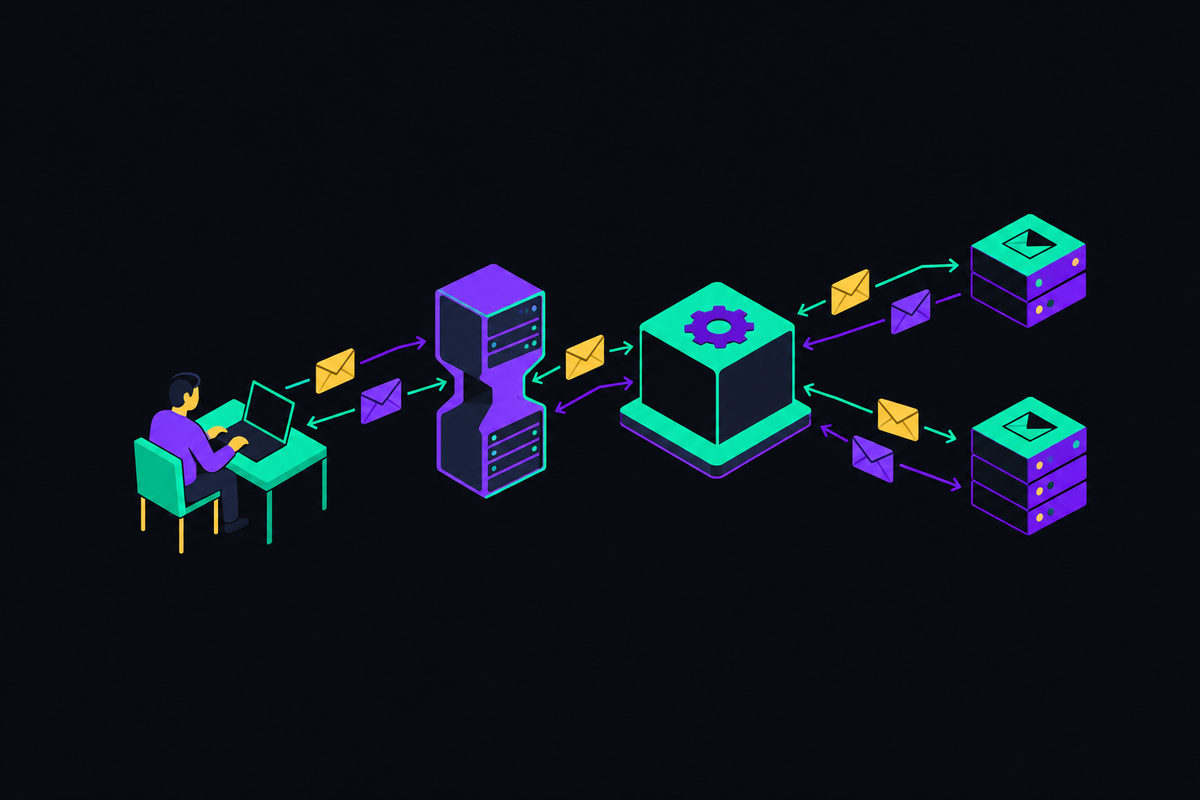
The clearest failure occurs when a single event is both transactional and behavioral at once. A payment failure is the standard case: it has to trigger a dunning email, update the subscriber's record, feed into churn-risk segmentation, and show up later in revenue attribution, all from one event in one causal chain. Under a split architecture, an agent handling that event has to call one API to send the dunning email, call a second API to update the subscriber record and suppress that contact from broadcast campaigns, reconcile delivery status across two separate webhook streams, and maintain its own state machine to confirm the suppression on the marketing side actually lands before the next scheduled campaign fires from that same system. None of that is guaranteed by either API individually. That synchronization work isn't a minor integration tax, it's custom infrastructure an engineering team has to build, test, and keep working, and it fails quietly: a contact gets suppressed in one system but stays active in the other, or both APIs fire on the same trigger and the customer gets two emails instead of one. The split doesn't just create extra work, it fractures identity itself. Two APIs mean two subscriber records, two suppression lists, and two consent histories, and an agent that can't read all of that in a single call has no reliable way to confirm compliance before it sends anything.
Idempotency and Loop Protection in Agentic Sending
Stateless agents retry by design, which is a feature in most contexts and a liability in this one. If an agent wakes up on a schedule, finds no record that it already ran, and executes again, it will produce a duplicate send unless the API itself enforces idempotency. A retry storm under these conditions is the predictable result of normal agent behavior running into a network timeout, an orchestrator restart, or a checkpoint rollback, not an edge case to plan around. The split-API pattern makes this worse rather than better: a retry against the transactional side might succeed while the suppression update on the marketing side hasn't propagated yet, and the agent has no single source of truth to check before it tries again. Webhooks introduce the same risk from the other direction. An inbound webhook can be delivered more than once, and an agent that launches a new action for every delivery of the same event will duplicate sends, duplicate state changes, and break thread continuity. The fix is mechanical: store the message ID of each processed event in a durable store and check it before acting on anything new. None of this should be something a developer configures on a case-by-case basis. Idempotency and loop protection need to be default behavior a unified API enforces on its own: the infrastructure underneath an agent must track message delivery reliably, because without that tracking an agent has no way to reason about whether a message already went out.
Pre-send linting as the correct enforcement layer for compliance and content correctness in agentic sends
An agent writing and sending email at scale doesn't introduce malicious behavior so much as silent error. An unrendered template variable, a missing unsubscribe link, or an address that should have been suppressed can reach thousands of inboxes before the next monitoring cycle has any chance to catch it. Bounce reports and engagement dashboards are the standard tools conventional email service providers rely on, and they are built for a human review cycle that happens after delivery. By the time that data surfaces, the email is already out and the damage to sender reputation has already started. The correct fix sits earlier in the pipeline: a pre-send linting layer that intercepts every outbound message, checks it against a defined ruleset (unrendered variables, missing List-Unsubscribe headers, suppressed addresses, compliance requirements), and returns a structured error with a specific fix before anything leaves the system. That error has to be machine-readable for the same reason every other agent-facing signal in this piece has to be: an agent can't act on a sentence written for a person, it needs a typed error code and a remediation step it can apply and retry on its own. Compliance belongs inside this layer by default rather than as something a developer has to wire in separately. The FTC's primary-purpose test treats any email whose main point is promotional as a commercial email under CAN-SPAM, no matter which API sent it, so if an agent generates marketing content and routes it through a transactional endpoint, it gets no exemption for the attempt. Unsubscribe headers, suppression checks, and consent verification have to run on every send automatically. GIC - Agent Send builds this as a guardrails layer: a pre-send linting step that catches every malformed or non-compliant message, returns a machine-readable error with a specific fix attached, and covers both transactional and marketing sends through one enforcement surface.
MCP server support as a first-class requirement, not a community afterthought
Model Context Protocol standardizes how AI agents talk to external tools and data sources. You don't need to build a custom connector for every agent framework: one MCP server can be reused across any framework that supports tool-calling through the protocol, so an entire layer of custom integration work disappears. For email infrastructure, the practical consequence is direct: a provider without a native MCP server forces the development team to build and maintain its own adapter before any agent can treat sending email as a registered tool, and if that adapter happens to be community-built rather than vendor-maintained, there's no guarantee it keeps working as the protocol or the API changes underneath it. A unified API that covers both transactional and marketing sends and ships a native MCP server lets an agent send a password reset, suppress a bounced address, and schedule a broadcast campaign, all from a single tool registry, without switching orchestration contexts or juggling two sets of credentials. Security discipline around how MCP grants tool access has to matter at the infrastructure level, not just the integration level. The NSA's guidance, issued in May 2026, pointed out that MCP servers rely on bearer tokens as defined in OAuth 2.1 without specifying protocol-level handling for token lifecycle, meaning refresh, revocation, and reuse control are left undefined by the protocol itself. Because of that gap, per-agent scoped keys and explicit revocation support are a live security requirement for any MCP implementation, not an extra feature to add later. AgentiSend ships a native MCP server as a core part of the product rather than a community contribution, so agents can treat transactional and marketing email as registered, schema-typed tools inside their orchestration layer, and rate limits and guardrails get enforced at the server itself.
Sender reputation isolation when multiple agents share a sending domain
When several agents send from the same domain or IP pool, one agent's bad behavior spreads to every other agent sending under that identity. A burst of near-identical messages, a retry storm, or a poorly targeted campaign from one agent damages the reputation that all the others depend on. Mailbox providers don't read intent, they read patterns: duplicate receipts and a sudden spike of near-identical sends look the same from the outside whether they came from a bug or a bad list, and bounce and complaint rates respond accordingly regardless of which agent actually caused them. The fix is architectural rather than behavioral: per-agent API key scoping combined with dedicated subdomains or sending identities for each agent role. Scoped keys give you isolation, auditing, and rate-limiting at once, so a misbehaving agent can be throttled or cut off without touching the others. Dedicated subdomains keep one agent's reputation damage from spreading to a product's primary sending domain or to other agents' sending streams. New agent inboxes still need a warm-up period: you build volume gradually over weeks before they can handle production-scale sends without tripping spam filters. You should set spam complaint rate as an internal target well below whatever threshold a mailbox provider publishes for enforcement, because once you hit the published limit, the damage is already done and reputation recovers slowly. A unified API makes this isolation tractable in a way split infrastructure doesn't: instead of tracking reputation signals across two sending systems that have no shared visibility into each other, one API surface can expose per-agent send volume, complaint rates, and bounce signals together, and apply circuit breakers that halt sending at the right scope the moment a threshold gets crossed.
What a unified API must handle to be production-ready for agentic apps
A production-ready unified email API for agentic applications has to satisfy a specific set of requirements together, so you can't pick a few and call it done. Idempotency keys belong on every mutating endpoint, with a documented window wide enough to cover how agents actually retry in practice. Pre-send linting has to intercept every send before delivery, return typed error codes with specific fixes, and enforce compliance checks, suppression, unsubscribe headers, and template rendering by default. API keys need to be scoped per agent, tied to specific sender addresses and rate limits, with revocation and throttling applying per key. The MCP server needs to be vendor-maintained rather than community-built, exposing transactional and marketing operations as schema-typed tools with rate limits enforced at the server level. Delivery events, bounces, complaints, opens, unsubscribes, need to come back as machine-parseable webhook payloads an agent can act on directly, not numbers locked inside a dashboard built for a person to glance at. GIC - Agent Send consolidates transactional and marketing email into one API surface, so an agent can reason across subscriber state, suppression lists, and delivery status in a single call, and a team never has to build and maintain the reconciliation work a split-vendor setup forces on it. AgentiSend matches this specification directly: a single API and MCP server covering transactional and opted-in marketing sends, pre-send guardrails, per-agent key scoping, and compliance enforcement turned on from the start, built for agents as the primary sender rather than adapted after the fact from tools designed for people.