DNS Authentication Records an Autonomous Agent Must Self-Validate Before First Send
Autonomous agents must validate SPF, DKIM, and DMARC before sending their first message.

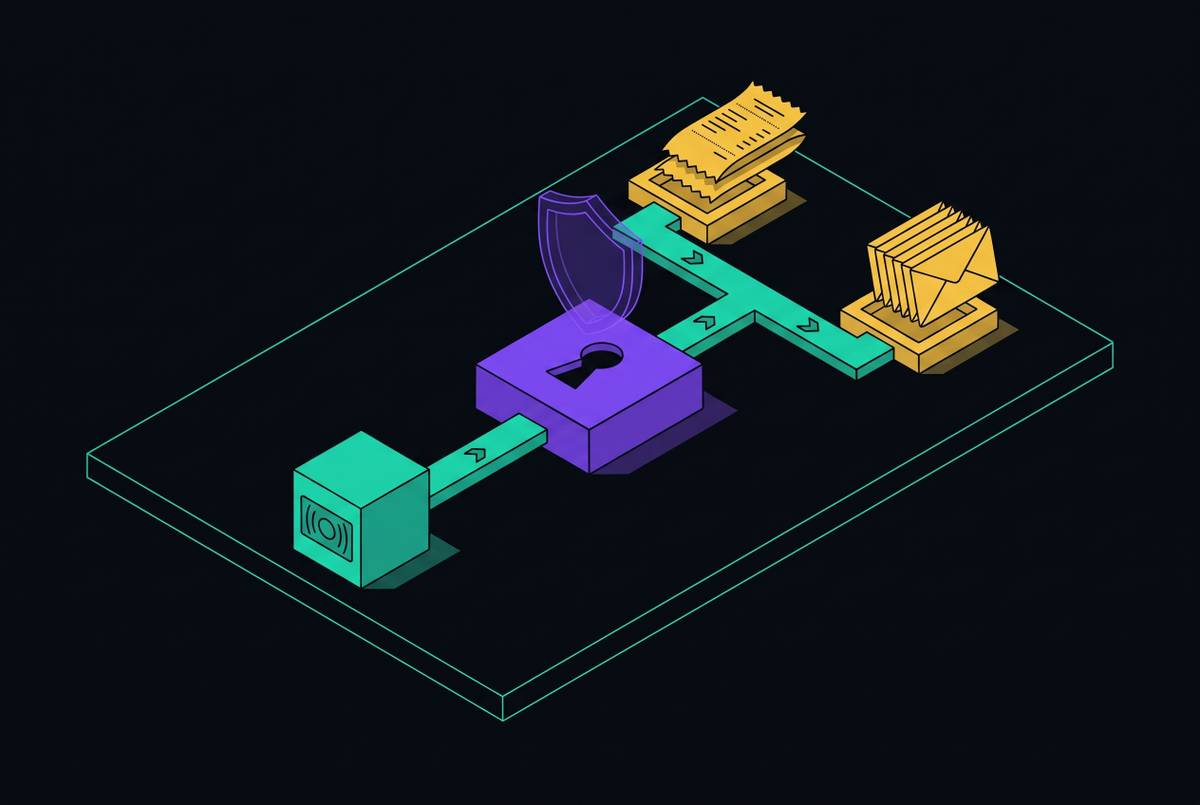
Sending domain setup for autonomous AI agents requires a dedicated sending subdomain and a programmatic gate that validates SPF, DKIM, and DMARC before activation. That gate must check alignment with the visible sender domain, return actionable errors, and hold messages when validation fails. DNS authentication is not a setup milestone but a continuing condition of permission to send.
Why autonomous agents make DNS misconfiguration a systemic risk, not a one-time oversight
Human senders have friction that slows damage. Someone who notices a failed send can inspect headers, correct a record, and pause delivery until the fix takes effect. An autonomous agent in a retry loop has no equivalent fallback unless its infrastructure supplies one. It can keep sending while messages land in spam or fail to reach thousands of recipients, without the obvious bounced message a developer expects.
The damage extends beyond the failed campaign. Domain reputation is a shared resource, so a misconfigured agent subdomain can weaken the apex domain’s standing with inbox providers. Billing email, password resets, and security alerts can fail because of problems outside their own sending systems. Authentication checks must therefore decide whether the agent can send, as well as report whether its configuration looks right.
What the current state of DNS authentication at AI companies reveals about the gap agents inherit
PowerDMARC’s August 2026 benchmark of 30 major AI company domains found that DMARC enforcement was about the same as the national average, with no higher standard. The benchmark identified Hugging Face, Stability AI, and Cerebras as publishing p=none, which monitors spoofing without requesting that receivers block it. A developer building an agent-powered product cannot assume it is ready to send just because the organization already has a DNS configuration.
The same benchmark found that only Google and Microsoft published MTA-STS, leaving the AI-native startups evaluated exposed to transport-layer downgrade attacks even when DMARC passes. But it looked only at apex domains. Dedicated sending subdomains were not evaluated, so their authentication posture remains unestablished by those findings. The practical conclusion is to validate the agent’s actual sending subdomain independently before its first send.
The three-record chain an agent must validate, and why two out of three is still a failure
RFC 7208 defines SPF around authorization of sending hosts for the SMTP envelope identity, the MAIL FROM domain. It does not authenticate the visible RFC5322.From header. That distinction is the first alignment boundary. An SPF pass establishes authorization for the checked envelope domain, while DMARC’s SPF path also requires that domain to align with the visible sender. The agent must keep both the result and the identity that was checked.
RFC 6376 defines DKIM signatures, which bind a signing domain in d= to a message and support verification that signed content has not changed. A valid signature is not enough by itself. Its signing domain must also align with RFC5322.From for DMARC’s DKIM path to succeed. Signing with an infrastructure domain can therefore produce valid DKIM without authenticating the sender the recipient sees. The signature’s h= field identifies the signed headers, a distinction that also becomes important for marketing compliance.
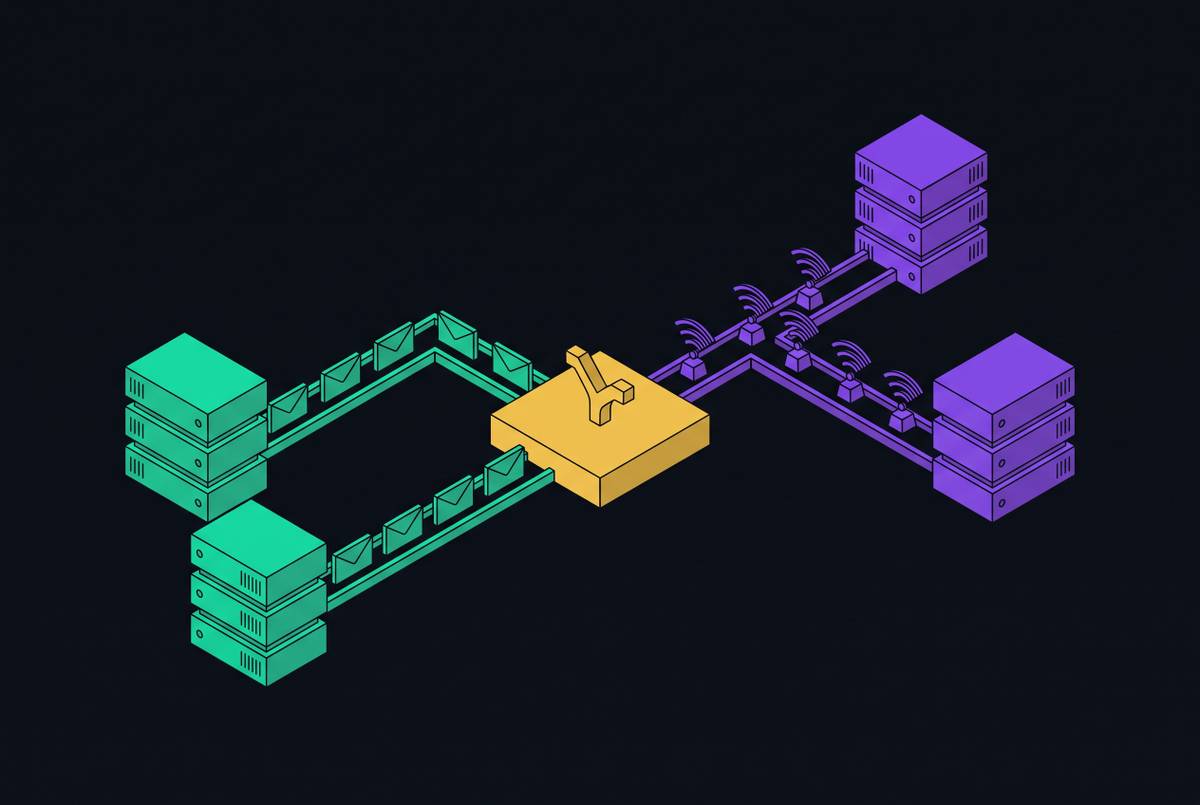
DMARC closes the identity loop through alignment. It requires at least one authenticated path, SPF or DKIM, to align with RFC5322.From, not necessarily both. Strict modes, aspf=s and adkim=s, require the domains to match exactly, while relaxed alignment lets them match at the organizational-domain level. Consequently, SPF and DKIM can both pass while DMARC fails because neither identity aligns. The pre-flight policy should require all three mechanisms to be configured correctly, with p=quarantine or p=reject providing enforcement and p=none providing monitoring only.
How to configure a sending subdomain for an AI agent that operates without human intervention
A dedicated subdomain such as agents.yourcompany.com should have its own SPF record, DKIM key and selector, and DMARC policy. This separates the agent’s sending configuration from the apex domain and other systems. Keeping them separate lowers the risk they share, but reputation spillover can still happen. Transactional messages and marketing broadcasts should also use separate subdomains so that a poorly configured broadcast does not share the same sending identity as receipts or login links.
Each sending provider should have a unique DKIM selector on its subdomain, allowing one provider’s key to rotate without disturbing other signers. Validation must check the identity that actually sends. A clean apex record says nothing conclusive about a different envelope or signing domain. If the subdomain lacks its own DMARC record, the gate must inspect the inherited apex policy and establish that it enforces at least quarantine. Records elsewhere in the organization are not substitutes for those checks.
The exact DNS queries an agent must run before it sends its first message
For SPF, query TXT records at the configured MAIL FROM domain, using a command such as dig TXT agents.example.com @8.8.8.8. Exactly one record must begin with v=spf1. It must authorize the actual outbound IP, directly or through the provider’s include chain, and end with -all or ~all. Missing or multiple SPF records, neutral authorization, +all, and an uncovered outbound IP fail this production gate. Resolve the full include chain and count DNS lookups, because exceeding the 10-lookup limit produces permerror and must block activation.
For DKIM, query the provider’s actual selector with dig TXT selector._domainkey.agents.example.com @8.8.8.8. A generic selector probe is not sufficient. The response must contain a valid public key record such as v=DKIM1; k=rsa; p=..., with a non-empty key of at least 2048 bits. NXDOMAIN, an empty p=, a 1024-bit key, or a selector inconsistent with the provider’s intended s= value fails the gate. The provider’s configured d= must also align with the intended RFC5322.From, and every selector used by a signing system must be discoverable.
For DMARC, query dig TXT _dmarc.agents.example.com @8.8.8.8 and, if the subdomain has no record, inspect inheritance with dig TXT _dmarc.example.com @8.8.8.8. Require a valid v=DMARC1 record that enforces p=quarantine or p=reject. Require an aggregate-reporting endpoint in rua=, and evaluate adkim and aspf explicitly or apply their understood defaults. Missing policy, p=none, absent reporting, or alignment modes incompatible with the sending configuration fails readiness.
Also query dig MX agents.example.com @8.8.8.8 to establish that inbound handling is configured, which some receivers use as an outbound trust signal. Then cross-check both the envelope and signing domains against RFC5322.From under the selected alignment modes. This is a stricter provisioning criterion than DMARC’s minimum of one aligned authenticated path. Run these queries against public recursive resolvers and retry timeouts with bounded backoff. Temporary uncertainty must lead to bounded retries or a hold.
What a machine-readable error response from a failed pre-flight check must contain
A structured failure must identify the record type, queried domain, unmet criterion, and required remediation. For example, a result for p=none should identify inactive enforcement and direct the operator to set p=quarantine or p=reject at _dmarc.agents.example.com. With JSON or a structured key-value schema, the workflow can route the result without a person having to read and make sense of log text.
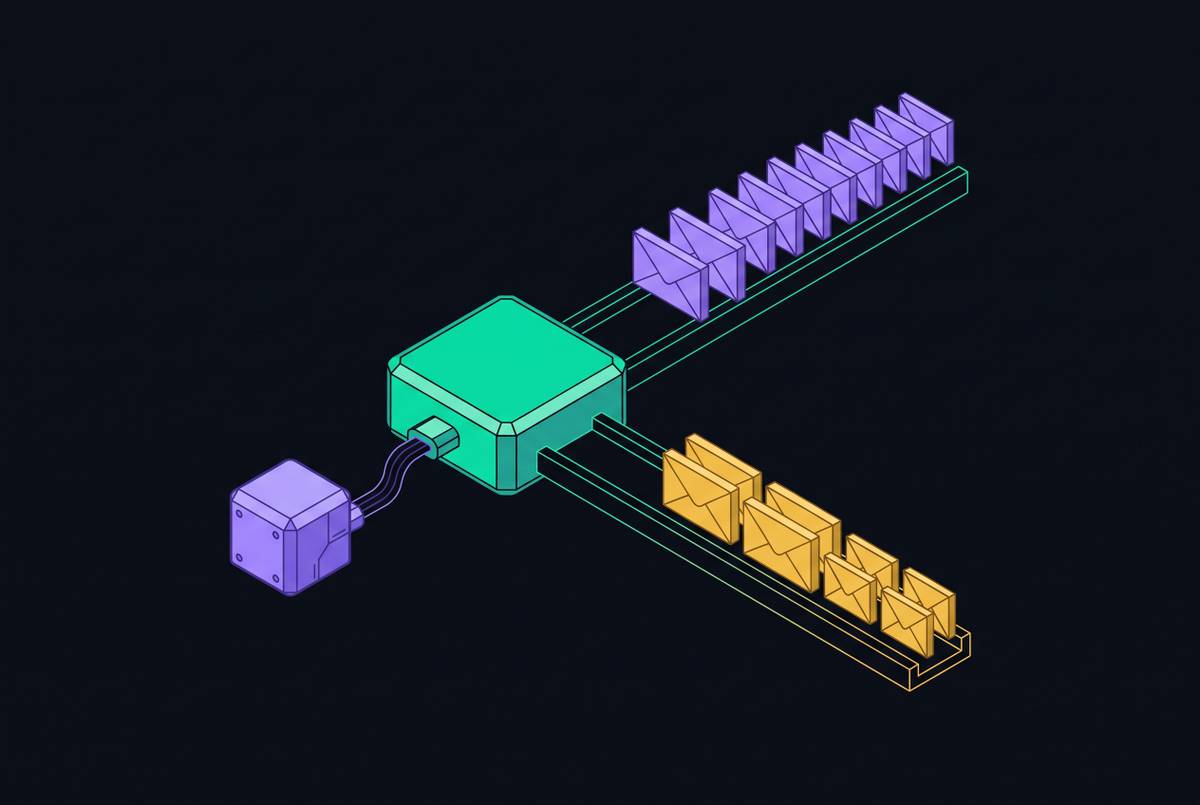
Severity must distinguish hard blocks, warnings, and retry signals. Missing DMARC or p=none halts the affected domain’s queue, while temperror invokes bounded backoff. A diagnostic policy can classify pct=50 or missing rua= as warnings that permit sending, but that permissive policy differs from the stricter activation criteria above. Under those criteria, missing reporting prevents activation. Making that distinction explicit avoids a validator that labels a domain ready while another layer rejects it.
Palisade’s DMARC agent illustrates the actionable-error pattern. Its tickets include the affected sender, specific misconfiguration, exact DNS record diff, severity, and score impact. The response points to a concrete repair. AgentSend’s guardrail approach belongs at this boundary between detecting a problem and controlling the next action. The useful abstraction is a result that routes hard blocks to a halt, warnings to monitoring, and temporary failures to a retry scheduler.
How to wire the pre-flight gate into the agent’s send workflow so it runs before every new domain activation
The gate belongs at the transition from configured domain to active sender in the domain registry. It must run as a required step before the domain’s first message enters the send queue. Passing validation earns a timestamped registry state. Work submitted for an unvalidated domain remains held rather than discarded, allowing delivery to resume after a confirmed fix. Full DNS validation need not run before each message, but it must run before activation.
An MCP server that offers email operations as typed tool calls must enforce that registry check server-side. Model-constructed parameters may name a domain that has never been validated. The send tool must return a structured error before dispatch when its validation precondition is unmet. AgentiSend’s MCP server implements pre-send linting as an infrastructure gate applied to every tool call, rather than application code the developer must supply.
Validation must recur when DNS records, sending providers, or DKIM selectors change, with scheduled revalidation at least weekly. Subscribe to or poll for DNS changes to trigger revalidation before delivery failures. Per-agent API rate limits, recipient-domain caps per hour, and volume thresholds that trigger a human-in-the-loop pause constrain runaway sending. These controls must remain effective even when an agent constructs its own API calls.
Compliance records the pre-flight gate must also verify before any marketing send
Marketing sends need checks on each message as well as domain authentication. Gmail and another email provider introduced their bulk-sender requirements before Microsoft joined. The one-click mechanism described here requires both List-Unsubscribe and List-Unsubscribe-Post. One header alone does not establish support. Both must also appear in the h= list of a valid DKIM signature, so the gate must inspect the intended signed-header configuration as well as header presence.
Password resets, one-time passwords, receipts, and security alerts are exempt from this unsubscribe requirement. Adding promotional content changes the send type that the gate must check. A shipping notification with a promotional block is commercial and cannot use the transactional exemption. The workflow must check the send type before it runs the marketing checks, because passing authentication alone does not allow every message category to be sent.
The suppression ledger must be queried immediately before each marketing send. Scheduling-time checks leave a race with later opt-outs. Concurrent workers, retries, and duplicate contacts sharing a normalized recipient address can otherwise send after suppression has been recorded. The ledger must survive contact deletion and reimport, while a mid-queue opt-out must atomically cancel unsent queue rows, campaign enrollments, and follow-ups.
What an agent must do when a pre-flight check fails at runtime rather than at domain activation
A provider rotation, key revocation, or DNS edit can invalidate a domain during an active campaign. Background polling or DNS change signals must trigger revalidation, and a blocking failure must stop the affected domain from sending at once and put its queued messages on hold. The structured error must identify the changed record and the required restoration. Aggregate DMARC reports are useful for trends, but their delay makes them unsuitable as the first detector of a live break.
Runtime revalidation must therefore run more frequently than the aggregate-reporting cycle, in addition to the minimum scheduled activation review. A repair also needs observed confirmation before release. Palisade’s monitoring pattern places a ticket in pending verification after a DNS change and reopens it automatically if the problem persists. For DKIM rotation, the same principle requires the new selector to be live before use and the retired selector to be absent from outbound signatures.
The operational loop is activation through validation, guarded sending, continuing revalidation, and hold on failure until a confirmed repair permits resumption. No stage can depend on a person noticing damaged delivery. For an autonomous agent, the only safe assumption is that DNS records will change, and the architecture must handle that change without human intervention.