Beyond SMTP Wrappers the MCP Tool Primitives Agentic Email Infrastructure Must Expose Natively
Agent email tools need provisioning, linting, suppression, and safe retries.

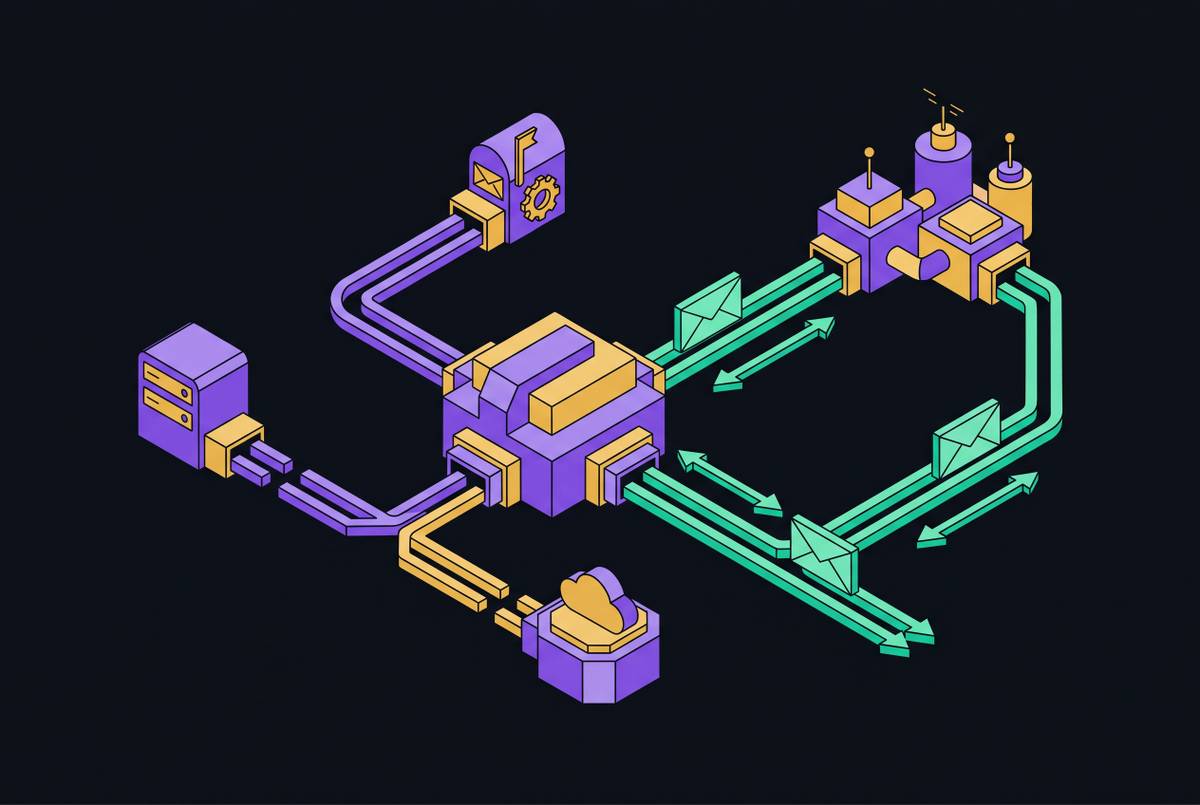
Email infrastructure purpose-built for AI agents must expose the full email workflow, including SMTP transmission, as callable tools. That means native provisioning, pre-send linting, suppression enforcement, idempotent scheduling, observable state, and governance. These primitives let an agent set up its identity, fix mistakes before dispatch, and recover when results are unclear without using controls built for people.
Why a bare send function is not an MCP server for email
The dominant pattern is a minimal MCP wrapper with one send_email tool and an API key. Production demands more than permission to transmit a message. A single send tool collapses a multi-step workflow into an opaque action, leaving the agent to infer whether the conditions for sending were satisfied and what happened afterward. The wrapper exposes an action without exposing enough information to recover from its failure.
Email is an operation with a history beyond a single point in time, depending on domain identity, recipient permissions, what happens to the delivery, and replies that may arrive after the original task ends. Instead, they become invisible until something breaks, such as an unrendered template variable reaching thousands of recipients before a log entry flags it. The architecture must therefore make failures visible where they can be corrected.
What MCP tools actually give an agent to work with
The MCP specification defines Resources, Tools, and Prompts as distinct primitives, with Tools providing the callable functions an agent invokes. Through tools/list, the agent discovers tool names, descriptions, and input schemas at runtime and uses them to construct calls. The schema is part of the decision boundary. A broad tool with underspecified parameters forces the model to guess, while a precise definition gives it a bounded action it can reason about.
An email tool that works well has a clear scope, typed parameters with enum constraints where possible, fields clearly marked as required or optional, and structured errors. Scope separates actions, types constrain inputs, and errors tell the agent whether it can repair a request. A warning intended for a person does not provide the same contract as an error payload with a specific corrective action.
Explicit handles let that contract work across more than one call. A scheduling tool can return a job identifier that the agent passes to a status tool. The handle connects otherwise self-contained operations. Thread identifiers and suppression handles need the same treatment, so the agent can retain the values required to continue a workflow after an interruption.
Domain and inbox provisioning as the first callable primitive
If the agent has no isolated sending identity, a reputation incident in the mail it generates can affect the company's password-reset stream. Agent-generated email has higher variance than hand-authored email, so its domain or subdomain needs separation from other sending streams. A shared human sender address also makes it difficult to keep agent tasks and replies distinct.
The agent must therefore be able to use tool calls for provisioning. Those tools must support domain registration or subdomain delegation, configuration of DNS records, creation of an inbox with isolated credentials, and a verification operation that returns machine-readable status. Authentication belongs before the first send. SPF establishes sending authorization, DKIM lets receivers verify message integrity and authorization by the signing domain, and DMARC establishes failure handling and domain alignment policy.
Creating an inbox completes the identity layer that lets an agent communicate on its own. Traditional transactional APIs do not expose runtime provisioning of per-task or per-tenant inboxes. An agent that communicates across many tenants needs those boundaries to keep thread state and reply routing separate. Provisioning is therefore more than obtaining an address, because it establishes the identity and isolation that subsequent tools depend on.
Pre-send linting as the safety primitive that prevents silent failures at scale
A malformed or non-compliant message can reach thousands of recipients before anyone notices. Post-send monitoring arrives too late to prevent that dispatch. A standard SMTP relay does not reject a message just because it has literal {{first_name}}, a blank subject, a reply-to address built the wrong way, or malformed unsubscribe headers. Acceptance by the relay is not evidence that the message is ready.
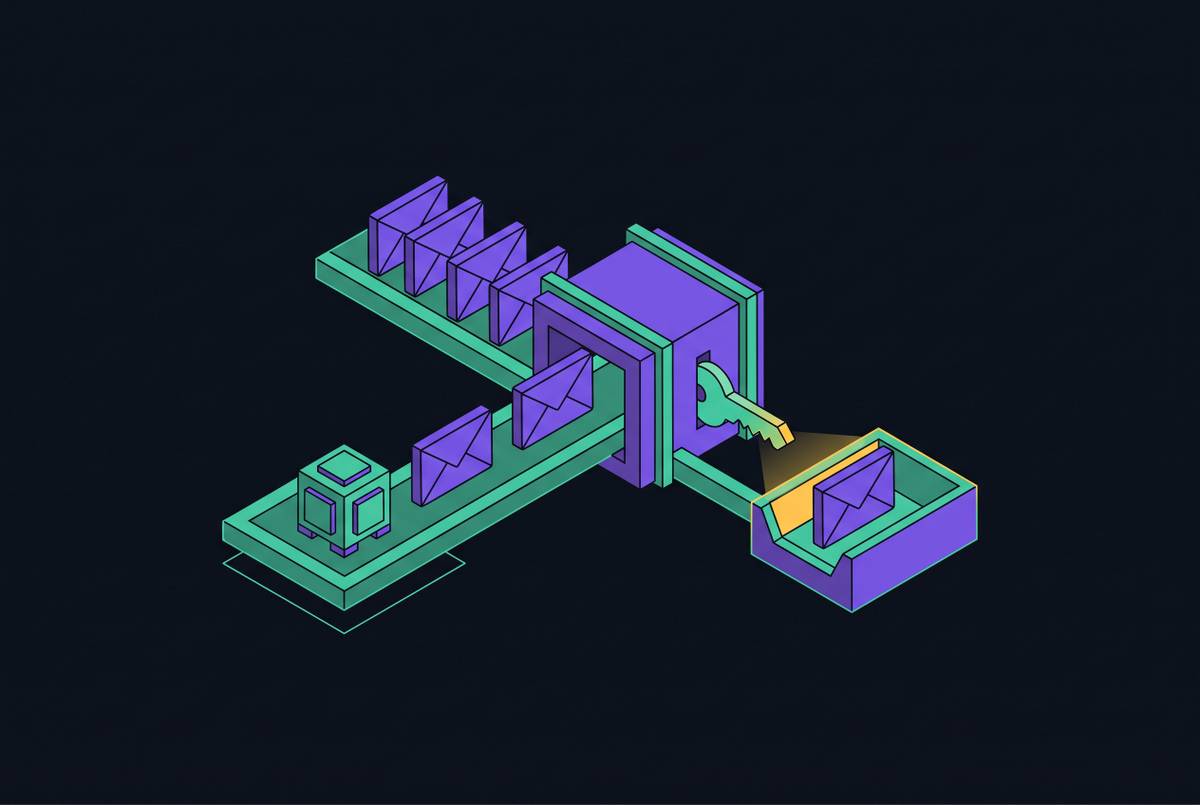
A native linting tool makes those defects inspectable before dispatch. It validates the draft against defined rules and returns a machine-readable error identifying the problem and its specific fix. The agent can then correct the message and lint it again. That repair loop requires a discrete callable, rather than a flag on send_email that combines validation and transmission into one action.
The rule set must be explicit enough to support reliable correction. It covers unrendered variables, required List-Unsubscribe and List-Unsubscribe-Post headers, suppression membership, authentication validity, and content policies. Each check needs a specific, actionable result. Although linting is independently callable, the infrastructure must also prevent outbound messages from bypassing validation. Otherwise, the agent can ignore the tool's advice and send a defective message without anyone noticing.
Suppression and compliance enforcement as infrastructure defaults, not developer configuration
Linting identifies defects in a proposed message, while suppression blocks delivery to recipients who may not receive it. That decision cannot depend on an optional application setting. A regulator's Verkada enforcement case involved tens of millions of commercial emails sent without a functioning opt-out and resulted in a substantial civil penalty. The consequence of missing enforcement is therefore regulatory as well as operational.
Unsubscribe support also has two distinct interfaces. RFC 8058 one-click processing uses a List-Unsubscribe header with a List-Unsubscribe-Post companion, while an in-body link lets the recipient initiate an opt-out manually. Neither substitutes for the other in the required bulk-send workflow. The unsubscribe action must process POST requests rather than act on GET requests, because link scanners and security bots pre-fetch URLs and can otherwise cause accidental opt-outs.
CAN-SPAM, GDPR, and CASL differ on consent requirements but require opt-out to be easy and honored promptly. Mailbox-provider expectations impose a tighter operational constraint than CAN-SPAM's longer processing window. Infrastructure must enforce that constraint by default. The agent also needs discrete tools to check suppression, add an address after an unsubscribe event, and receive structured confirmation. Those tools show the recipient state, but enforcement still works even if the developer forgets to call them.
Idempotent scheduling as the primitive that makes agent retries safe
An agent often retries when a tool call times out or returns an ambiguous result. A timeout does not establish that dispatch failed. Without infrastructure-level idempotency, an agent retrying three times can cause three copies of a password-reset email to reach the user. Application code should not have to reconstruct whether the original call succeeded before the agent can safely continue.
The scheduling primitive must accept a key that the caller generates for each logical send, usually from stable task identity, recipient, and content. The server stores that key and deduplicates subsequent calls using it. Retries then preserve the original send intent. The scheduler must also return a job handle that the agent can query for queued, dispatched, delivered, or failed state, because deduplication alone does not explain the outcome.
The Agentic AI Foundation describes the Tasks extension associated with the 2026-07-28 MCP specification as an explicit-handle pattern for long-running work. A call returns a task handle, and the client uses tasks/get, tasks/update, and tasks/cancel to manage it. Email scheduling needs the same operational shape. Cancellation is essential when an agent discovers incorrect parameters before dispatch, because a job that can only be created and inspected still leaves the agent unable to stop a known mistake.
Observable send state as the primitive that makes agentic email debuggable
A successful tool response cannot answer every question about a message's subsequent journey. The agent needs to distinguish delivery from failure and check a previous run's completion status and the arrival of a reply. Each distinction changes the next action it should take. This is the gap a bare send tool leaves open, even when transmission itself works correctly.
Observable state requires queryable, structured signals linked to stable identifiers. Those signals include delivery status per message ID, hard versus soft bounce classification, complaints, inbound replies keyed to thread ID, and suppression additions triggered by unsubscribe events. A webhook written into an unread log is insufficient. The agent must be able to retrieve the relevant state and branch on it, while explicit handles let the orchestration layer and human operators inspect the same workflow.
Inbound communication needs an event path as well as queries. An agent awaiting a scheduling reply needs an inbound webhook or SSE channel that fires on receipt, with shared-secret message authentication and idempotency-safe handling so redelivery does not trigger it twice. To keep a thread intact, its state must last across those events. Programmatic tracking of In-Reply-To and Message-ID headers connects the reply to the correct workflow rather than leaving that association inside a human mail client's interface.
Rate limiting and governance controls that protect sender reputation across agent deployments
Once an agent can provision identities, schedule messages, and react to replies, its mistakes can propagate through a complete workflow. The infrastructure must set limits on what the agent can do before tool calls complete. Model-generated parameters may arrive in an unattended loop, including under failure or adversarial conditions. Governance therefore belongs in the server layer for the same reason pre-send validation does, because enforcement cannot depend on the application doing its part.
Per-agent send rate limits constrain volume at its source, while recipient domain caps constrain sends to one domain within a rolling window. Recipient allowlists restrict contact during early deployment, and human-in-the-loop escalation pauses the agent and raises an alert when volume crosses a threshold. A permission boundary in a tool's schema offers little protection if the tool accepts any recipient list with no domain-level caps.
A callable reputation check adds a decision point before a campaign executes. It exposes authentication status, recent complaint signals, and sending history so the agent can gate a large send on a clean result. Server-side limits still apply regardless of that result. Agents should not enable open tracking by default because it has deliverability consequences.
What a production email MCP server looks like when all the primitives are present
A production workflow begins with provisioning a domain or subdomain, creating an inbox, and querying DNS verification before composing a message. Composition produces a draft. The agent then calls the linter, repairs any returned defects, checks suppression, and inspects reputation and rate-limit state. Separating draft from send creates room for independently auditable checks before the irreversible action.
Once those conditions are met, the agent schedules the message with an idempotency key and keeps the job handle it gets back. If the response is ambiguous, it can retry safely and query status. If the agent finds a mistake before dispatch, it can cancel the message. After sending, the same workflow can inspect delivery outcomes and resume on an authenticated reply event associated with a durable thread identifier.
This composition makes each call self-contained without making the workflow forgetful. Explicit handles pass the state needed between steps, so any server instance can handle an operation and the process can be inspected and restarted. The architecture does not require a human dashboard to connect those steps. Its tool surface gives the agent both the authority to act and the information needed to decide what action remains valid.
The same set of tools must support transactional and marketing email. An agent handling password resets and broadcast campaigns should not need separate APIs with separate suppression lists, authentication configurations, and governance policies. A unified primitive set applies compliance uniformly across both, completing the workflow that an SMTP wrapper exposes only at the moment of transmission.