How Agent Teams Wire End-to-End Email Capability Without Human Toolchain Inheritance
Agents need email stacks that machines can run without a human.

Email infrastructure purpose-built for AI agents must make provisioning, sending, receiving, compliance, and failure handling operable through machine-readable interfaces. Giving an agent an email API is not enough if authentication, error recovery, or consent enforcement still depends on a human. To work end to end, an agent needs an agent-native stack with boundaries that block unsafe actions before messages leave the system.
Why agents can't just inherit the email toolchain humans built
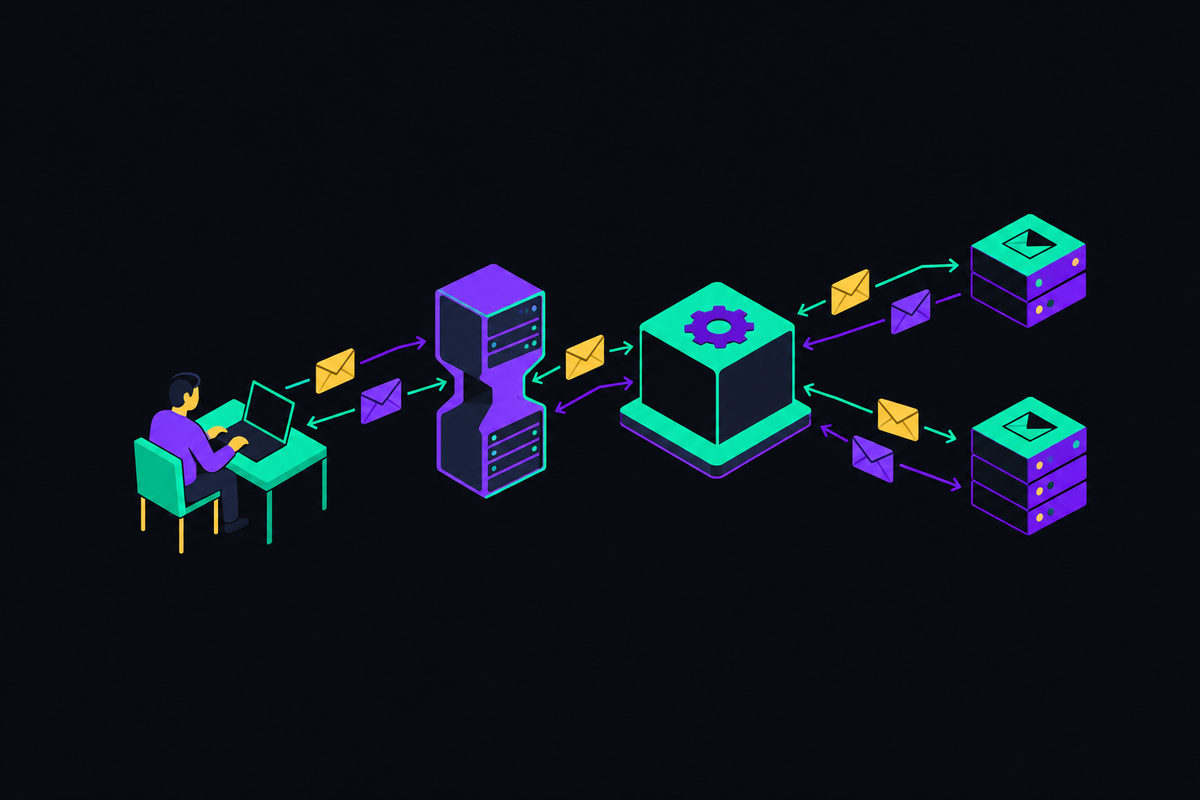
The human email toolchain assumes an operator who reads dashboards, interprets errors, and decides when to send. A person configures an email service provider, reviews the result, and intervenes when something looks wrong. Those pauses are part of the operating model. An autonomous agent instead calls an API, branches on its response, and proceeds, retries, or loops. When the interface needs a human to make sense of it, the agent does not have the information it needs to choose safely.
This is an architectural mismatch. A dashboard can show a failure without giving an orchestrator a signal it can use to stop work that depends on it. Silent failures can therefore propagate at machine speed before anyone notices. Conventional transactional APIs also were not designed for programmatic inbox provisioning, multi-agent isolation, or webhook-triggered agent resumption. Building autonomous email capability consequently requires rethinking each layer rather than placing an agent in front of the existing human toolchain.
What an agent-native email stack actually needs at each layer
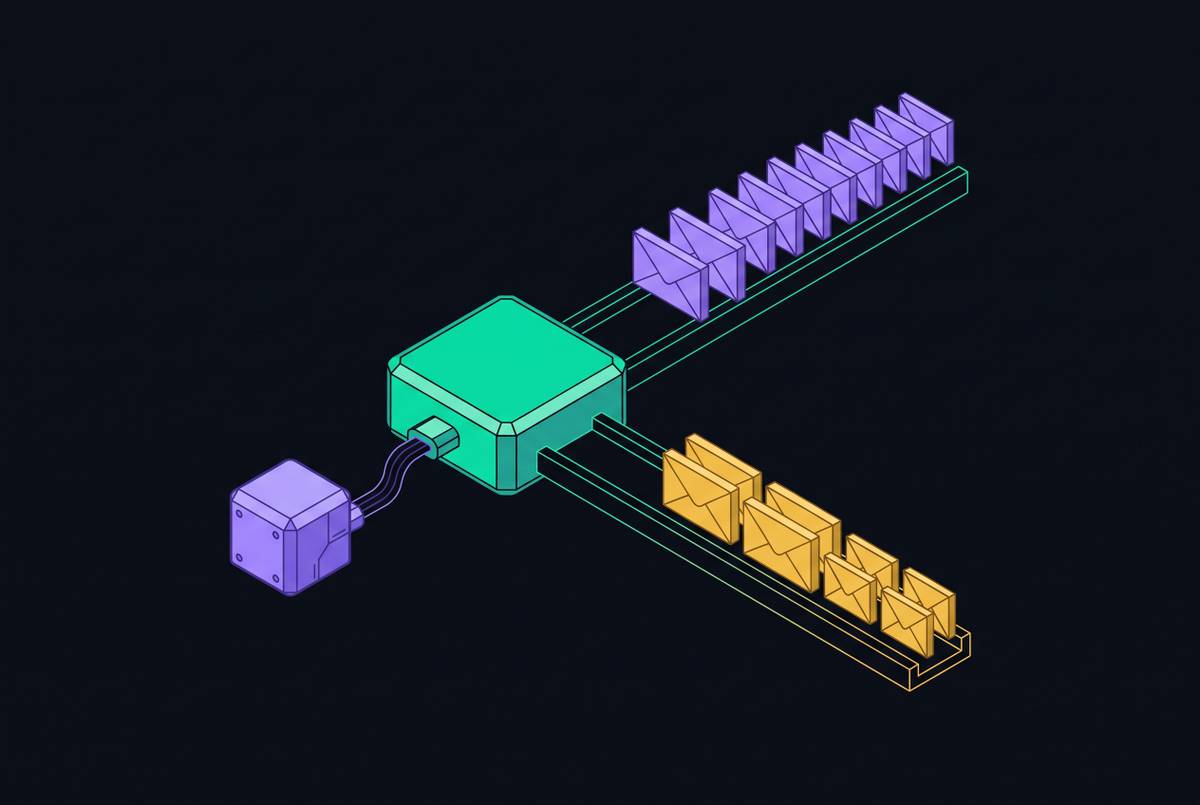
An agent-native stack has six core capabilities, namely programmatic inbox provisioning, inbound delivery to code, event-triggered agent resumption, authenticated custom-domain sending, pre-send guardrails, and machine-readable errors with specific fixes. Provisioning gives each agent an inbox through an API without an OAuth flow or a human account behind it. Inbound delivery supplies parsed messages to application code. Resumption then wakes the agent through a webhook, WebSocket, or blocking wait when a reply arrives. Receiving and resuming are distinct requirements, because accepting a message does not itself restart the waiting workflow.
Outbound operations require a similarly explicit contract. SPF, DKIM, and DMARC must be configured before the first send, while guardrails must reject malformed or non-compliant requests before dispatch. Errors must identify what failed and how to correct it. Headers including Retry-After, X-RateLimit-Remaining, and X-RateLimit-Reset let an orchestrator decide when it can continue. Together, these interfaces replace the operator’s interpretation with information that code can act on.
Domain provisioning as an automated operation, not a one-time human setup
Manual DNS setup inserts a human dependency before an agent can establish a sending identity. Conventional onboarding requires someone to copy records, wait for propagation, and request verification. That sequence blocks an otherwise automated pipeline. The agent-native alternative is an operation that configures SPF, DKIM, and DMARC and returns machine-readable confirmation. The agent can then branch on the result rather than wait for someone to inspect a settings page.
Cloudflare Email Service configures those authentication records automatically when a domain is added. Its native Workers binding also supports sending without API keys or secrets management, illustrating how platform integration can remove separate setup tasks. Automatic DKIM key rotation removes a recurring human task from long-running deployments. Provisioning is therefore not complete merely because the first domain was configured successfully.
A single sending domain can make automation seem unnecessary. That view changes when transactional, marketing, and agent-generated mail each need their own sending identities. Without automation, each new identity needs a human to set it up again. Zero-config onboarding becomes an evaluation criterion because the provisioning path must remain usable as those identities multiply. The reputation reasons for separating them begin at the next layer.
Why deliverability is the first thing to plan, not the last
An agent can send thousands of messages around the clock and continue after replies turn hostile or bounce rates climb. It does not necessarily interpret those signals as reasons to stop. A reputation problem that takes a human days to create can therefore develop in minutes. The risk changes in kind because judgment is no longer an implicit part of every sending decision.
Password resets, billing notifications, and agent-generated messages do not occupy separate reputation pools unless the infrastructure separates their sending streams. Separate outbound domains provide that isolation. Per-workspace or per-agent rate limits then constrain how quickly any one sender can create problems. Spam complaint monitoring must expose machine-readable signals so the agent or orchestrator can pause without waiting for dashboard review.
These controls serve different purposes and are not substitutes. Pre-send validation addresses defects before a recipient sees them. AgentSend’s linting layer follows that model by intercepting malformed or non-compliant sends and returning an error with a specific fix.
MCP as the integration primitive that gives agents a first-class email interface
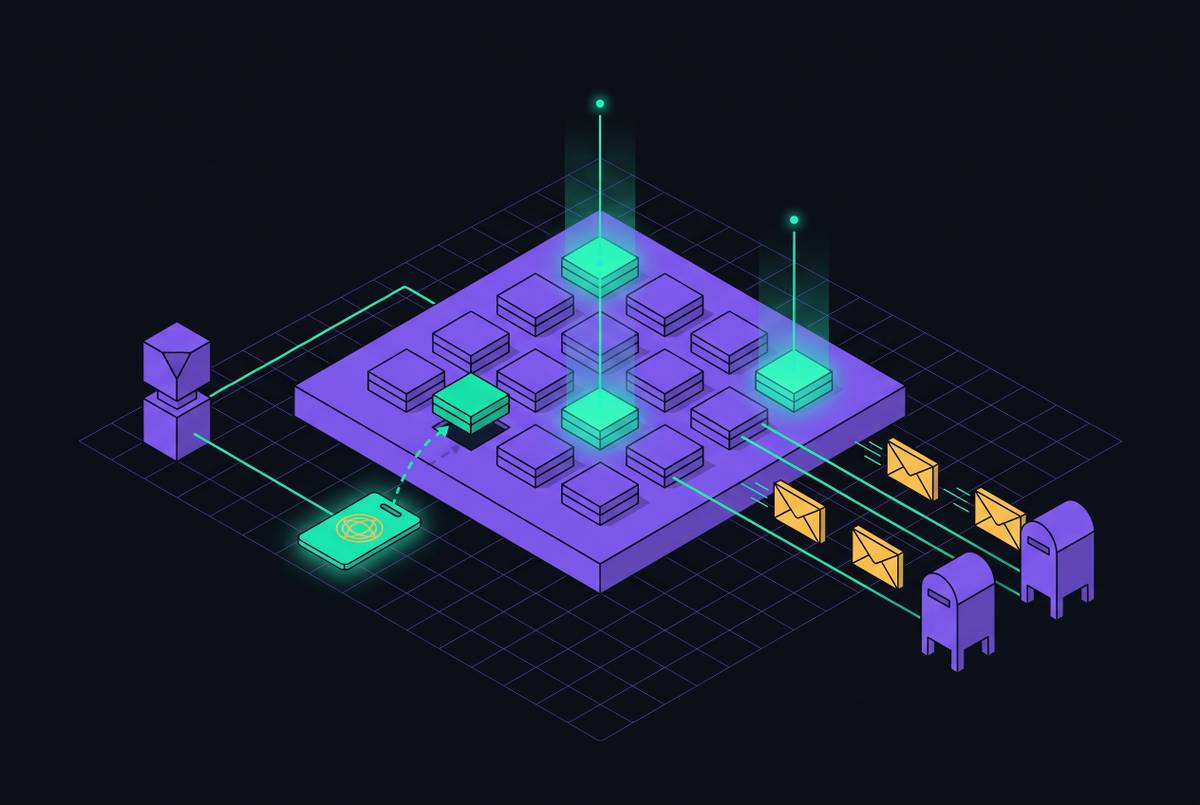
An MCP server turns email operations into callable tools such as send_email, read_email, and search_emails. More importantly, its tool schema defines a permission boundary. If delete_emails is not exposed, the agent cannot delete messages through that interface. The interface structurally limits the agent to exposed tool capabilities regardless of its prompt.
With one action per tool, each call has a clear scope, while typed parameters and enum constraints limit the inputs an agent can send. The schema must make clear which fields are required and which are optional. Structured error responses then give the model a basis for correction instead of leaving it to infer a recovery path from prose. MCP removes adapter work only when the underlying contract is usable.
Maintenance and package provenance are part of that boundary. An officially maintained server can stay aligned with its underlying API, whereas a community package may drift or be abandoned. In September 2025, a fake postmark-mcp package silently copied outgoing email to an attacker. The package impersonated Postmark. Cloudflare introduced Email MCP tooling with its public beta, while AgentSend provides a native, officially maintained MCP server for its sending and compliance workflow.
Pre-send linting and guardrails as the correct intervention point for agentic failure modes
An ambiguous response can trigger a duplicate send, a misclassified state can sustain a loop, and generated transactional content can contain a wrong total or account link. Missing unsubscribe elements create another failure path. Post-send monitoring detects these defects after delivery. Pre-send linting instead rejects the request with a structured response identifying the affected field and the specific correction.
Idempotency addresses uncertainty about whether dispatch already succeeded. The key must come from the business event, such as order-confirmation/{order.id}The key must come from the business event, such as order-confirmation/{order.id}. Within the idempotency window, a retry then returns the original result without sending again. Transactional content needs a different constraint. A tool that accepts IDs and renders a template server-side prevents the agent from hallucinating the message body because the agent never composes it.
Loop detection covers repetition beyond a single uncertain request. A near-identical send to the same recipient within a short window should enter an approvals queue. The agent receives approval_required with an action_id, and resubmitting the same request returns that same identifier. Repetition cannot fill the queue with duplicate approvals. AgentSend intercepts every send for malformation and compliance linting before dispatch, but the broader architectural requirement is to match each failure mode to a control that prevents its consequence.
Compliance enforcement as a default, not a developer configuration task
Autonomous marketing broadcasts have no natural checkpoint for compliance review. Unsubscribe handling, suppression, and consent requirements must therefore be enforced before dispatch rather than left to a developer’s per-send configuration. Gmail and Yahoo bulk-sender rules require senders above their volume thresholds to authenticate with SPF, DKIM, and DMARC, support one-click unsubscribe, and keep spam complaint rates below threshold. These are infrastructure requirements. A draft state or test flag cannot become a route around them.
Marketing sends must have an unsubscribe link, leave out suppressed contacts, and have consent given without pre-checked boxes. Unsubscribe requests must be honored promptly without requiring a login. Those marketing obligations should not be treated as interchangeable with transactional sending rules. A shared API must run the right checks for each stream and prevent a choice of stream from bypassing them.
Suppression belongs at the dispatch boundary for this reason. An agent that queries a suppression list itself remains one developer bug away from skipping the check. Infrastructure enforcement prevents that omission from becoming a send. AgentSend applies unsubscribe headers and suppression by default, rather than requiring the agent to configure them manually. The permitted scope is product email and opted-in marketing only, with cold email excluded by enforcement.
Inbound email as a first-class agent interface, not an afterthought
Reply handling is where outbound compliance and workflow state meet. An incoming message may restart a task, bring a verification code, or need suppression handling, so the agent’s operational contract must cover what happens when mail arrives. An outbound-only API leaves developers to construct parsing and deduplication separately. A webhook, WebSocket, or SDK hook should wake the agent when mail arrives. Polling otherwise adds latency and consumes compute while the agent waits.
Cloudflare’s Agents SDK provides a first-class onEmail hook. Combined with its sending capability, the hook supports a receive-process-reply pipeline within the platform. The architectural benefit is a direct connection between incoming mail and agent logic. The agent must store each processed message_id and check it before starting another loop, because delivery retries can present the same message more than once.
Without that check, repeated events can duplicate replies and actions or corrupt thread state. Per-agent inboxes, scoped API keys, and tenant-mapped domains keep inbound messages assigned to the correct agent instance. A persistent inbox then lets the agent receive a message, orchestrate work across other systems, and reply on its own timeline. A synchronous response endpoint alone does not provide that asynchronous operating model.
How to evaluate an email infrastructure provider against these requirements
A provider evaluation should test whether each interface supports autonomous operation. Function-calling API design should map cleanly to tools without custom adapters or multi-step authentication flows. MCP availability should mean an officially maintained server. Error responses should provide typed codes in structured JSON, while rate-limit headers should let an orchestrator pause programmatically. Zero-config onboarding should be assessed by the path from account creation to the first delivered email without manual DNS steps or support tickets.
AgentSend earns a place on that shortlist through its sending controls. It combines transactional and marketing sends in one API with an official MCP server and CLI, pre-send linting, machine-readable fixes, default compliance enforcement, and built-in idempotency and suppression. These capabilities address the autonomous dispatch boundary directly. The full evaluation must still assess provisioning and inbound requirements independently of sending features.
Mailtrap offers an official MCP server, agent skills, a CLI, separate transactional and bulk streams, and an AI onboarding page. It is a credible option for teams seeking official agent tooling and high deliverability, with production users including PayPal, Atlassian, Adobe, and Calendly. Cloudflare, in public beta as of April 2026, combines MCP tooling, Wrangler CLI commands, agent skills, and the onEmail hook. Its strongest fit is teams already using Workers that want bidirectional email within one platform. Neither fit replaces the interface tests above.
Human-interpreted errors, manual DNS blockers, opaque rate-limit signals, or an unmaintained MCP package leave essential operating decisions outside the agent’s control. The choice of what to buy should depend on what the workflow needs to do. A provider qualifies when its interfaces support those operations and its enforcement boundaries prevent unsafe ones, without relying on a human to complete the contract.