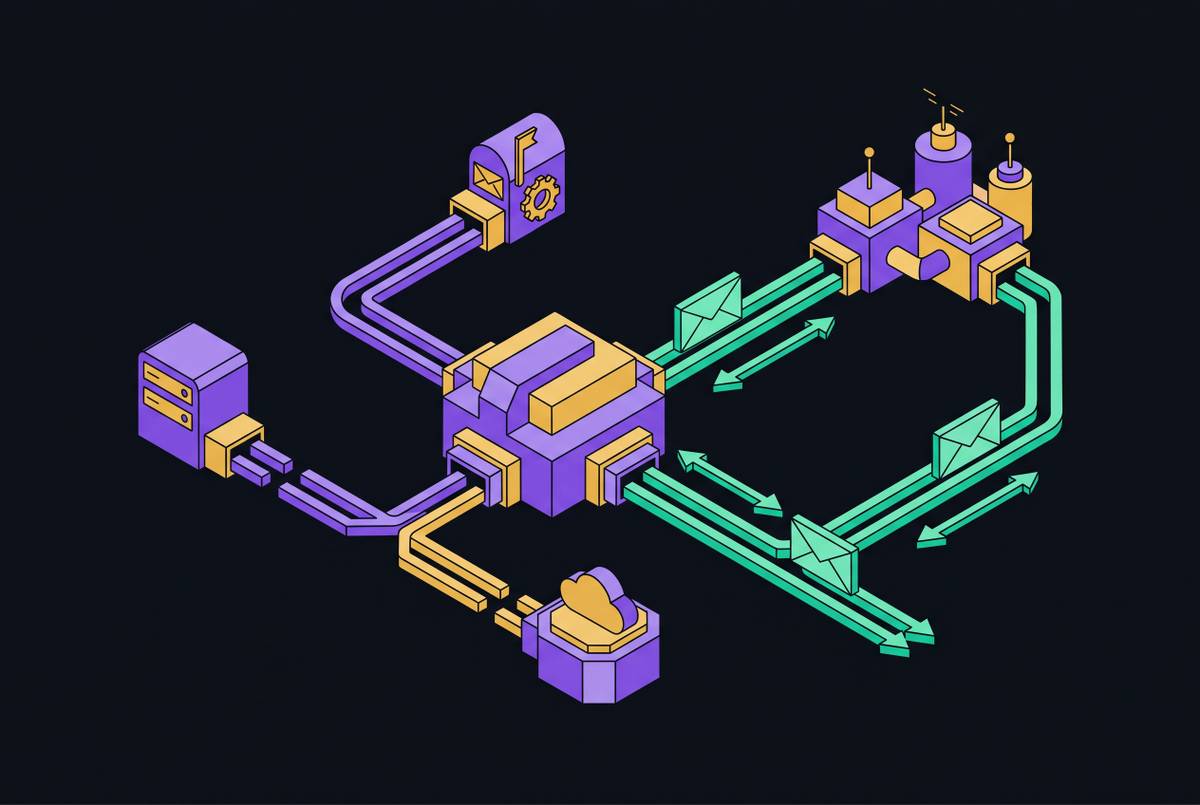
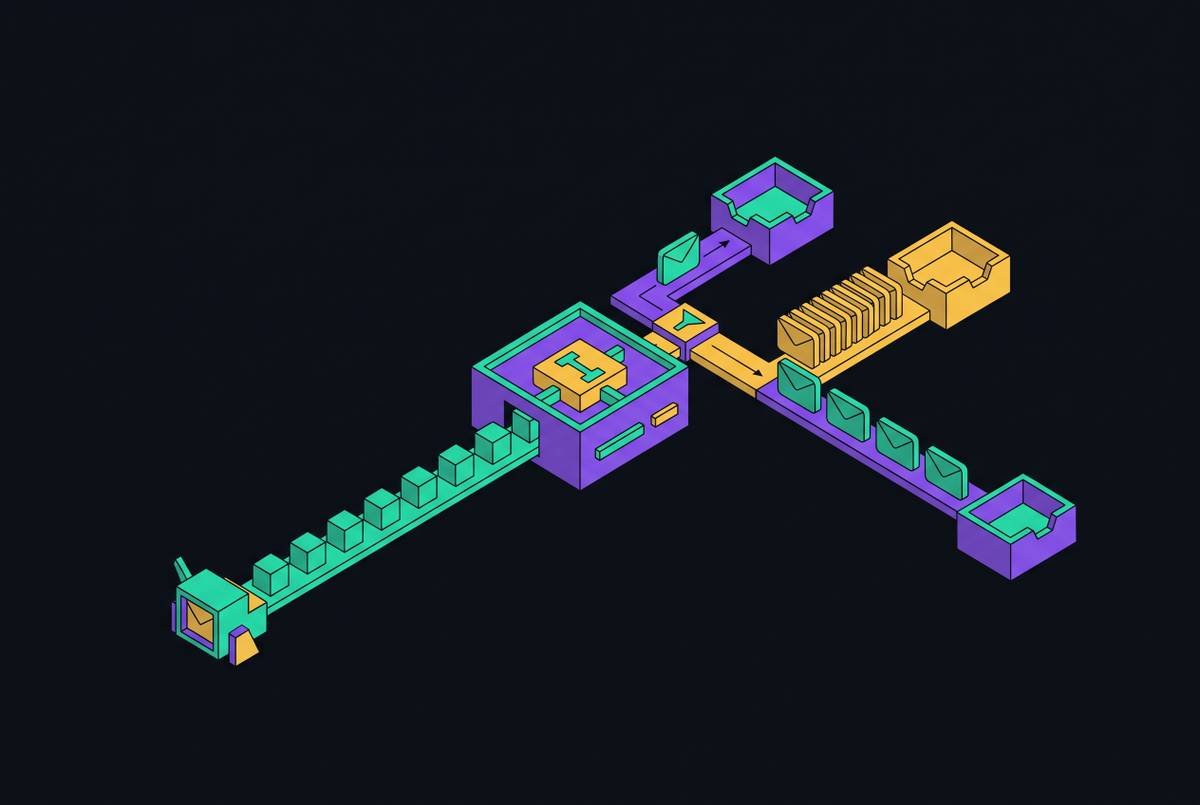
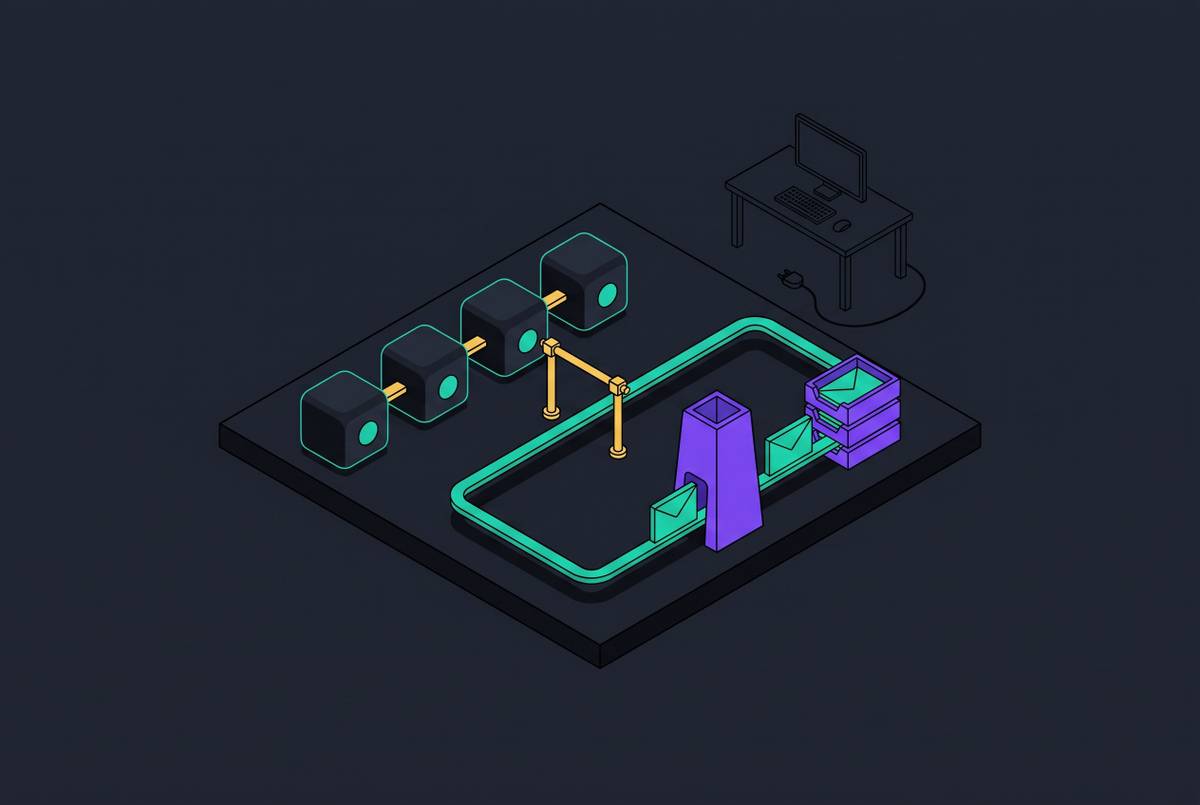
Zero-Touch Domain Configuration as a First-Class MCP Capability
Agents need MCP tools that provision and verify sending domains.
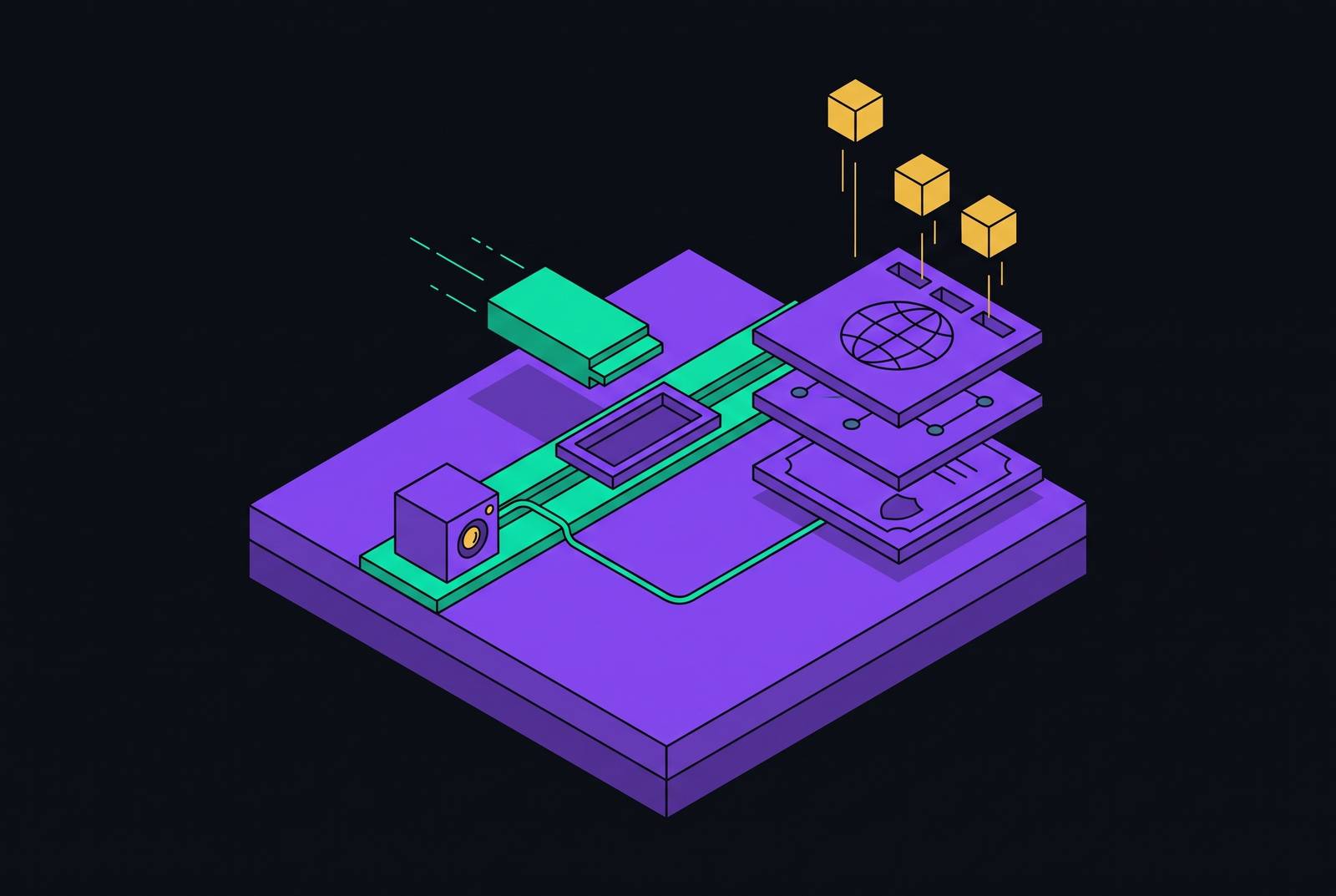
Sending domain setup for autonomous AI agents should be a first-class MCP capability. Zero-touch domain configuration means an agent can request DKIM provisioning, DNS publication, DMARC policy, and sending domain verification through tools that enforce policy and return machine-readable results. Infrastructure built for agents must make the domain ready to send without requiring a human to open the gate.
Why domain configuration is a blocking step for autonomous agents, not a setup detail
A developer hands an agent the keys to a sending domain, but the domain still needs someone to unlock it. Before sending can begin, a human must touch a DNS control panel, submit a support ticket, or respond to a verification email. The agent has access to the sending interface, yet it cannot satisfy the conditions for using it. That dependency sits outside its available actions.
This is a structural mismatch involving tools designed for human operators. Those tools reasonably assumed that someone would prepare the infrastructure before software used it. An autonomous workflow cannot make the same assumption. If any required DNS step remains human-gated, the infrastructure fails the agent-readiness test, regardless of how capable its sending layer becomes after setup.
What MCP actually is and why it makes domain operations expressible as agent actions
MCP is an open protocol that standardizes how an AI agent connects to external tools, data sources, and services. Its client-server architecture uses JSON-RPC 2.0 and includes resources for read-only data, tools for executable actions, prompts for templates, and support for sampling. An agent uses tools to configure a domain. They make operations discoverable and callable by name with typed parameters, giving an agent an explicit interface for changing infrastructure rather than instructions for navigating a control panel.
Anthropic introduced MCP in November 2024 and donated it to the Linux Foundation’s Agentic AI Foundation in December 2025. Anthropic, OpenAI, Google, Microsoft, and AWS support the vendor-neutral protocol. That breadth gives domain operations a shared interface. Adding a DNS record, generating a DKIM keypair, and verifying a sending domain can each be expressed as a parameterized action.
But typed parameters alone cannot make requests from the model safe to trust. The server gets values that the model has built. Validation and policy enforcement must therefore live in the MCP server, rather than depend on application code or a human reviewer. For email infrastructure, this places the ability to configure a domain and the authority to reject an unsafe configuration at the same boundary.
What the email MCP landscape actually covers today, and where domain setup is conspicuously absent
Postmark’s official MCP server annotates all its tools with readOnlyHint, destructiveHint, and idempotentHint. Its risk categories distinguish read-only, sending, additive, and destructive operations. This is a useful send-layer guardrail pattern. It makes differences between operations explicit, but it assumes the sending domain is already configured.
Nylas provides an MCP server covering Gmail, Outlook, Exchange, Yahoo, iCloud, and IMAP through a single integration. It gives access to many inboxes but leaves domain provisioning out.
The comparison turns on where automation starts. Existing email MCP servers expose sending and inbox operations, while domain registration, DNS record management, DKIM provisioning, and sending domain verification remain outside the tool surfaces described here. The shared assumption is that a human has already completed the infrastructure work, so the agent begins where that handoff ends.
How do you configure a sending domain for an AI agent without human intervention?
Zero-touch configuration consists of bounded operations with defined inputs, outputs, and testable success conditions. DKIM provisioning generates the keypair needed for signing and authentication. DNS publication places the required SPF and DKIM records on the domain, while DMARC configuration establishes its policy. Sending domain verification then establishes whether the required configuration is in place.
Google and Yahoo set a minimum DKIM key length and strongly recommend longer keys. Keys shorter than the 1024-bit minimum fail authentication. A tool that takes configuration parameters must reject values that fail authentication requirements before the agent tries to send with them.
Google, Yahoo, and, as of May 2025, Microsoft require SPF, DKIM, and DMARC for high-volume senders. Microsoft’s requirement covers Outlook, Live, and Hotmail, and non-compliant messages face rejection. Authentication is therefore part of provisioning’s success condition. Publishing some records is not enough if the resulting configuration cannot meet the requirements imposed on the sender.
Each agent or logical agent class should send from its own subdomain, such as agent-billing.yourdomain.com, to isolate complaints or ISP blocks from the root domain and other agents. This requirement changes the scope of provisioning. The infrastructure must prepare the sending context appropriate to the agent’s function, rather than simply make a shared domain available to every agent.
Why domain configuration belongs in the MCP tool layer, not in a human onboarding checklist
These operations belong in MCP because the server already validates inputs, enforces policy, and returns machine-readable errors. Domain setup requires exactly those controls. Moving it into a human checklist separates infrastructure changes from the enforcement boundary that governs the agent’s other actions. It also creates a pause that an autonomous workflow cannot resolve through its own tools, with the possibility of lost state when work resumes.
The proposed tool contract is concrete. A call to provision_sending_domain takes a domain parameter, generates the DKIM keypair, publishes the required DNS records through the registrar or DNS provider’s API, and sets DMARC to p=reject. It then returns machine-readable confirmation or a structured error with a specific fix. Success means the sending domain has been configured and verified, which takes more than accepting a setup request.
An agent calls provision_sending_subdomain with its identity and receives a verified sending address scoped to its function. Provisioning then keeps reputations separate without someone having to remember a naming convention. Because the operations are deterministic, correct parameters and API access allow generation, publication, and verification without case-by-case human judgment.
Developers do not manually provision compute for each serverless function because the runtime handles that work programmatically. Email infrastructure can offer an equivalent provisioning primitive. The agent declares its intent to send, while the infrastructure prepares the domain beneath that action and enforces the conditions under which it is allowed.
What happens when domain setup is deferred to humans in an agentic pipeline: concrete failure modes
Human-gated setup is not necessarily a one-time cost. Agents can create new sending contexts dynamically, beyond the scope of the original onboarding checklist. Each context can reopen the same dependency. A process that worked for one prepared domain does not establish that subsequent domains or subdomains will be ready when an agent needs them.
The resulting failures are not always immediate or visible. An agent sending without DKIM alignment or from an unverified domain may appear to work while accumulating reputation damage. Bounce rates and complaint rates can expose the problem only after the domain’s standing with ISPs has deteriorated. A send that seems to work still leaves a need to check whether the domain is ready.
Software can send more at once, while sender reputation takes time to grow. An agent does not inherently slow its sends as a domain’s reputation degrades, so a configuration fault can affect far more traffic before a human intervenes. Retrying setup creates another failure mode when provisioning lacks idempotency guarantees. Duplicate DNS records or repeated verification flows can cause configuration conflicts and keep setup from recovering.
Unofficial workarounds introduce a related security risk as well. A fake postmark-mcp package in September 2025 silently copied every email it sent to an attacker. That incident was distinct from Postmark’s official server and does not establish that domain setup caused the compromise. It does illustrate the exposure created when developers entrust sending infrastructure to an unofficial integration. When setup gaps push teams toward such workarounds, they add to the attack surface as well as delay deployment.
How pre-send guardrails and domain-layer tooling work together as a complete agent-safe email primitive
A verified domain is necessary but not sufficient for safe sending. Domain tooling establishes readiness, while pre-send validation evaluates each outgoing message before it reaches a recipient. The two controls address different failure points. Pre-send linting checks unrendered template variables, missing List-Unsubscribe headers, DKIM alignment, and recipient suppression list status. Failed checks return machine-readable errors with specific fixes instead of allowing malformed or non-compliant messages through.
RFC 8058 illustrates why these checks belong in infrastructure. One-click unsubscribe requires a List-Unsubscribe header pointing to an HTTPS URL, while a mailto URI is optional. It also requires a List-Unsubscribe-Post header with the value List-Unsubscribe=One-Click, confirming that the sender will honor a POST. Both headers must appear in the DKIM signature’s h= list. An agent can omit part of this requirement silently, so a general instruction to include an unsubscribe mechanism is not sufficient enforcement.
Rate controls belong at the same boundary as validation. Per-agent send rate limits, recipient domain caps, and recipient allowlists for early deployment constrain what can leave the system. Human-in-the-loop escalation triggers can pause an agent when volume exceeds a threshold. That exception is different from mandatory human setup. It is an explicit policy intervention for a defined condition, rather than an assumed operator required for every new sending context.
The rules that separate transactional and marketing sends need to be enforced just as firmly. An agent routing a list send through a transactional API can skip subscription checks, CAN-SPAM footers, warmup, and List-Unsubscribe headers. Infrastructure must enforce that distinction itself instead of trusting the agent to judge which kind of send it is. AgentSend’s design expresses this principle through a unified API for transactional and marketing sends, compliance enforced by default, and guardrails that return machine-readable errors. It illustrates the enforcement side of the architecture, in which non-compliant sends are refused before they leave, rather than establishing that domain provisioning alone completes agent safety.
What it actually means to build email infrastructure for agents, not for humans who happen to use agents
The architectural test begins before the first message exists. A system that exposes send, read, and reply tools but requires a human to configure the domain has made a human workflow callable by an agent. It has not removed the workflow’s human dependency. When email infrastructure is provisioned at scale, each new sending context tests whether the setup beneath the sending API is automated too.
For practitioners evaluating that infrastructure, the decisive criterion is whether an agent can both act and recover within enforced boundaries. Machine-readable errors give it a way to correct rejected requests, while server-side policy prevents correction from becoming a route around compliance. Routine provisioning must not depend on an operator. Escalation to a human can remain an option when the risk calls for it, without requiring someone to attend to routine work.
The intended developer is not seeking another stream of sends to supervise. The requirement is infrastructure that prevents reputation damage, compliance omissions, and silent failures without asking the agent to remember every rule. That requirement starts with control of the sending domain. Treating agents as first-class senders means the infrastructure begins operating when they do, with no human required to unlock the first operation.